

STARTS November 1, 2026 · SIX-WEEK ONLINE COURSE · SARAH OWINGS · US$139
Trust is not a label we give a relationship. It is a question we keep asking the learner.
We often talk about trust as if it were something an animal either has or does not have. That interpretation is difficult to use. It does not tell us what trust looks like here, which conditions support it, or whether the learner’s pause, withdrawal, return, and alternatives genuinely change what happens next.
Trust Code brings those questions into observable daily interactions. Sarah Owings shows you how to take a baseline, examine antecedents and consequences, build rituals and safe spaces, and listen more carefully to the learner’s answer.
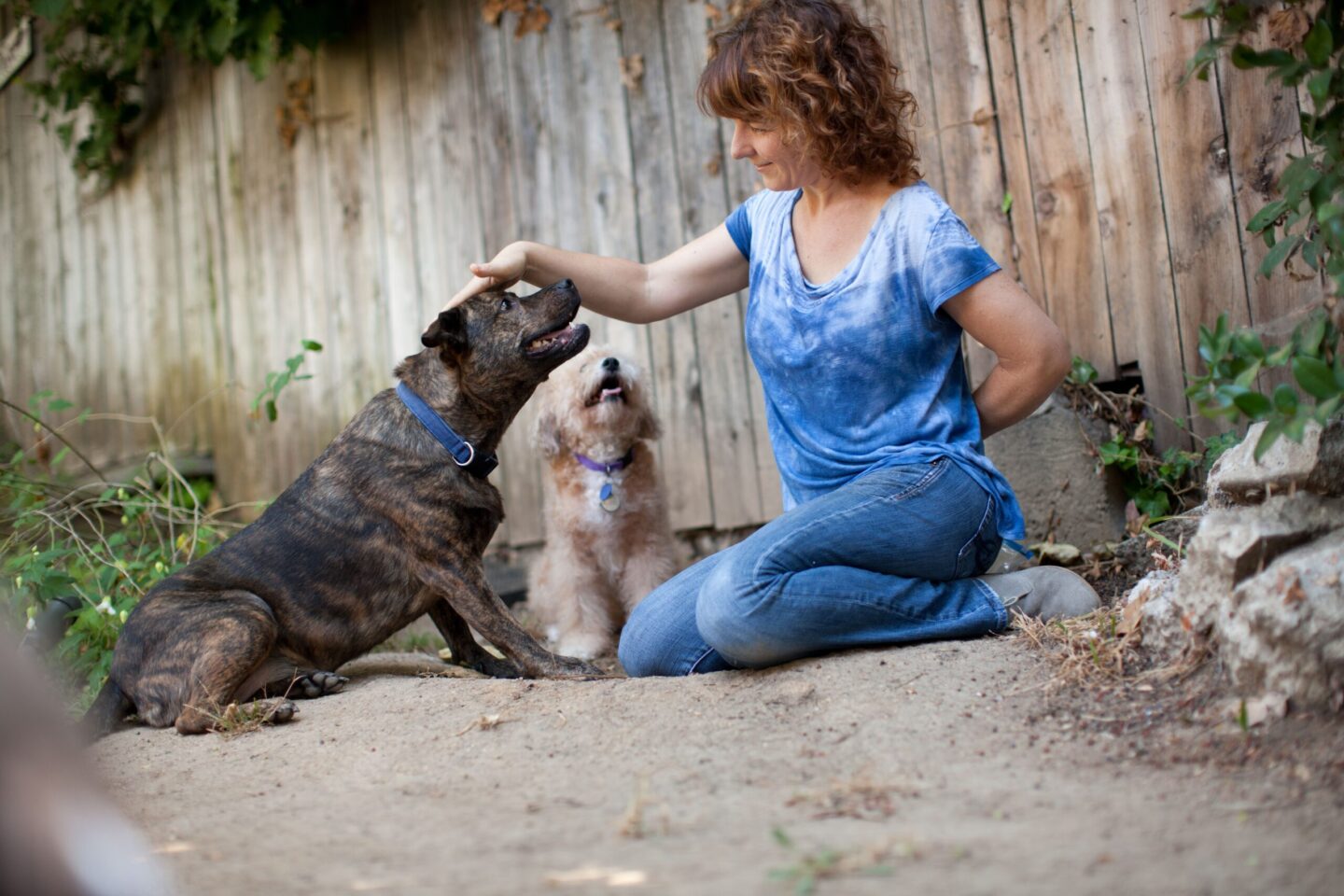 The useful question is not “Does this animal trust me?” but “What does participation look like under these conditions?”
- Define what you mean
- Move from a broad construct to behavior you can observe in one real interaction.
- Arrange for an answer
- Use antecedents, rituals, safe spaces, and clear routes to pause or return.
- Let behavior matter
- Check whether the learner’s response changes the outcome, then revise the plan when it does not.
A feeling can be real and still need an operational question.
Trust matters because safety, predictability, control over outcomes, and learning matter. Yet a large claim about a relationship can hide the details that would help us protect it. Remaining nearby may reflect participation, or it may reflect a lack of effective alternatives. Taking food may occur in a situation that is still difficult. A familiar ritual may support clarity in one context and fail in another.
Trust Code does not ask you to prove a permanent trait. It asks you to compare conditions. What happens when the learner can pause? What happens when moving away works? Which antecedent tells the learner what kind of interaction is available? What needs to be repaired after a necessary but difficult event?
See a Trust Code ritual in action
This example from graduates Jennifer Will and Pie is useful because it makes the interaction visible. Watch for the arrangement, the learner’s response, and whether participation has a clear route to change what happens next.
The Trust Code inquiry
- Choose one ordinary interaction. Begin where observation is safe, not with the most difficult event in the learner’s life.
- Write an observable trust question. Define what participation, pausing, withdrawing, and returning would look like in this context.
- Take a baseline. Record what happens before, during, and after the interaction without forcing the result you hoped to see.
- Change the arrangement. Work with antecedents, rituals, safe spaces, ask-and-answer communication, and effective alternatives.
- Compare and revise. Ask whether the learner’s behavior now changes the outcome and what still needs protection or repair.
Six connected areas of study
1 · Define and measure trust
Explore trust as a construct, define what it is and is not in observable terms, use the ABCs of trust, and take a starting baseline.
2 · Build with antecedents and rituals
Examine cup-filling places, daily rituals, portable safe spaces, happy husbandry arrangements, and the Shopping opt-in game.
3 · Move from cues to questions
Study ask-and-answer communication, clarify the response options, and examine how an Alone Zone or husbandry ritual can make participation more legible.
4 · Apply the question to a real interaction
Use the course concepts on one manageable case, compare the arrangement with the learner’s response, and refine what you mean by a successful interaction.
5 · Make “not now” meaningful
Continue ask-and-answer work and examine extinction, S-delta conditions, and what must be arranged for an unavailable outcome without making communication less trustworthy.
6 · Expand degrees of freedom and repair
Consider how many effective routes the learner has, how difficult events affect the trust account, and what careful repair can look like afterwards.
Practical lenses you can reuse
You will work with an observable trust definition, a baseline, ABC observations, an antecedent and ritual review, ask-and-answer communication, and a degrees-of-freedom check. These are not scores that certify a relationship as trustworthy. They are ways to notice whether the current arrangement gives the learner clearer information and more effective behavior.
The questions can be used across husbandry, play, training, rest, shared spaces, and other ordinary interactions. Many examples involve dogs, while the analytic principles apply across species.
Who this course is for
Trust Code is for professional animal trainers, behavior professionals, caregivers, and serious learners who want to examine trust without reducing it to a personality trait. It is especially useful when you care about cooperative participation, predictable routines, safe spaces, husbandry, and the small interaction patterns that accumulate over time.
Begin with an interaction that can be observed safely. The course is educational and does not replace individualized veterinary, clinical, or safety support for high-risk situations.

Your instructor: Sarah Owings
Sarah Owings is a Karen Pryor Academy Certified Training Partner known for applying behavioral principles to complex, real-life training questions. She has written on stimulus control, release cues, and toy-related cues, teaches internationally, and brings experience from both behavior work and nosework competition.
Her teaching combines close observation with a willingness to question the trainer’s first interpretation. In Trust Code, the learner’s behavior is not supporting evidence for a story we have already chosen; it is the answer that changes the inquiry.
Feedback from an earlier instructor-feedback edition
“Sarah’s keen observations and kind feedback were so helpful. I can hardly believe how much I learned in six short weeks.”
Michelle Hansen, Trust Code learner
The current US$139 offer is the complete course for independent study; the testimonial above describes an earlier edition that included Sarah’s individual feedback.
Study Trust Code in your own time
- Format: six-section online course
- Materials: written lessons, video examples, case material, and practical questions
- Access: one year
- Current option: Auditor / independent study
- Price: US$139
Questions before you join
Is this only about dogs?
No. Many examples involve dogs, but the questions about antecedents, consequences, participation, alternatives, and repair apply across species.
Will the course tell me whether my animal trusts me?
It will help you replace that global verdict with observable questions. Trust remains context-dependent and open to revision; the course does not issue a permanent score for a relationship.
Does the current offer include individual feedback?
The current US$139 option is Auditor access for independent study. Use the lessons, demonstrations, and course questions to analyse your own case; any future feedback edition would be listed separately.
Do the six sections impose weekly deadlines?
No. They show the conceptual sequence. With one year of access, you can pause, repeat, and return to an earlier question as your observations change.
Does this replace support for a difficult husbandry or safety case?
No. Use qualified veterinary and behavior support when pain, medical needs, bite risk, or other safety concerns require individualized assessment.
Ask a trust question the learner can answer.
Choose one ordinary interaction. Observe what changes when pausing, withdrawing, returning, and alternative routes become effective.
Course Testimonials
Sarah’s keen observations and kind feedback were so helpful. I can hardly believe how much I learned in six short weeks. What I love most is that Sarah’s teaching focuses on the concepts and principles behind how behavior works. Now, months later, I find myself rereading her comments and learning even more!
November 18, 2024
June 30, 2023
Sarah is an amazing teacher who is knowledgable, kind, and provides detailed, customized feedback tailored to you and your dog. I have learned so much in this course, refining constructs and training procedures that I thought I knew, but was able to go much deeper during the course. I love her examples, information, and way of creating a safe space to learn. We had so much fun during this course and made progress on issues that we are working on. I can’t wait for her to offer a 2nd level of this course! Thank you Sarah!