

SIX-WEEK ONLINE COURSE · AUDITOR US$139 · PREMIUM US$299
Stop treating attention as a trait. Build conditions that make voluntary participation and return more likely.
This course is part of the education path
Buy 20% cheaper the bundle Get the best deal!
See Education PathSIX-WEEK ONLINE COURSE · AUDITOR US$139 · PREMIUM US$299
Stop trying to “get” attention. Build the conditions that make participation likely.
Attention is often treated as something a dog either has or lacks. One trainer means eye contact. Another means returning after reinforcement. A third means responding to cues while the environment remains interesting. Until we define the behavior, “my dog is not paying attention” is a label—not a training plan.
Attention, Please! helps you build a clear session in which the learner can enter, respond, obtain reinforcement, reorient, pause, and return. The goal is not permanent eye contact. It is a training loop both participants can understand.
- Starts:
- 1 November 2026
- Registration closes:
- 14 November 2026
- Access:
- one year from purchase
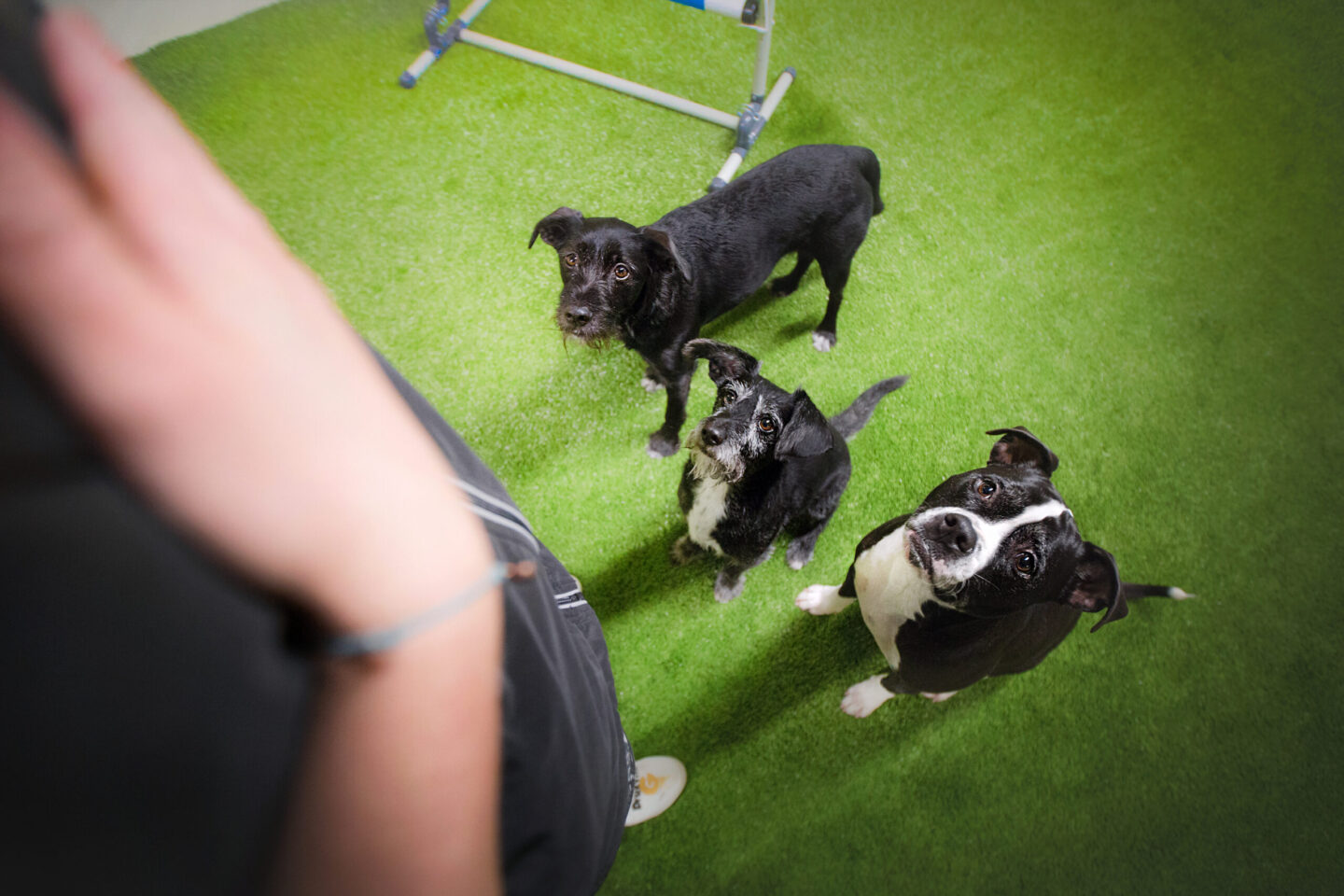 Looking away, gathering information, and returning can be part of a functional participation loop.
Build attention you can observe
- Define it
- Choose the specific behavior that matters in this context instead of training toward a vague idea of focus.
- Arrange it
- Make the start, reinforcement route, next opportunity, pause, and end of the session easier to recognise.
- Generalize it
- Change one environmental dimension at a time without turning the outside world into an endurance test.
The learner may not have “lost focus.” The contingency may have disappeared.
A session can become unclear while the trainer prepares food, changes equipment, decides on the next criterion, or presents a cue before the learner is ready. Reinforcement may pull the learner away from the next response. Eating may take longer in this environment. The session may begin without a clear entry and continue without a clear end.
From the trainer’s perspective, the dog stopped participating. From the learner’s perspective, there may no longer be a visible route through the session. This course teaches you to look for that first change and redesign the arrangement before asking the learner for more.
The enter–participate–return loop
- Enter. Establish what readiness to begin looks like for this learner and context.
- Respond. Present a clear opportunity only when the learner can use it.
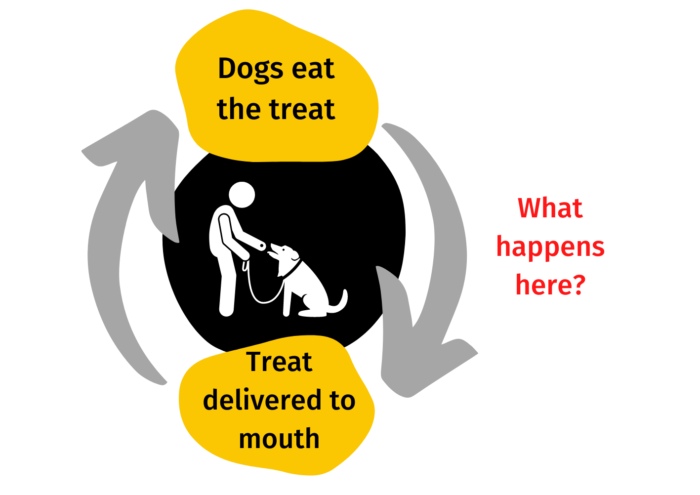
- Receive reinforcement. Observe delivery and eating as parts of the behavior loop.
- Reorient. Notice what happens after reinforcement instead of rushing the next cue.
- Continue, pause, or finish. Keep participation and an effective “not now” available.
Your six-week learning map
Week 1 · Define attention and arrange the beginning
Operationalize focus for your learner, establish acclimation, examine mutual responsibilities, audit food delivery and marker cues, and build a clear start-of-session behavior.
Week 2 · Make the end and return visible
Build a clear end to the session, observe what happens when the learner disengages, and examine responses to cues without repeatedly calling the dog back into the work.
Week 3 · Read the contingency
Use ABC relations to examine the training arrangement and practise movement-based attention without turning one game into a permanent pre-session ritual.
Week 4 · Strengthen the loop
Study extinction effects, waiting for the cue, and session sequencing. Build continuity without allowing your movement or food preparation to become the only signal.
Week 5 · Combine and backchain
Arrange useful breaks, connect the component behaviors, and use backward chaining to make returning to the session more predictable.
Week 6 · Take the system into harder contexts
Apply the loop to sport and everyday environments, analyse competing stimuli, and design generalization without simply asking for longer attention.
What you will practise
- a camera-test definition of attention for one real context;
- an acclimation and readiness observation;
- a delivery check that includes eating pace and the return to work;
- clear start, break, and end procedures;
- a backward-chained participation route;
- a competing-stimulus plan; and
- a generalization record that changes one relevant variable at a time.
You are not buying a collection of engagement games. The exercises are cases through which you learn to analyse behavior, choose an arrangement, and revise it when the session develops differently than you expected.
Watch the hidden part of the loop
This course treats food delivery and eating as behavior worth observing. In the course checkpoint, you record the learner’s pace, the trainer’s delivery, and the space between one piece of food and the next—because what happens there can determine whether another response is likely.
Who benefits most?
This course is for you if training begins with persuading your dog to join, works smoothly at home but disappears outside, or feels like a constant competition with the environment. It is equally useful when the learner already participates enthusiastically and you want finer control of your own mechanics, pacing, criteria, and reinforcement delivery.
You do not need an advanced dog or perfect food motivation. The principles concern behavior in context and have been applied by previous participants with dogs, cats, and exotic species. Adapt every exercise to the learner’s health, mobility, and environment.
What students from earlier editions say
Earlier editions included different participation routes. These comments describe the course’s ideas and applications; the November edition offers Auditor study or Premium participation with individual feedback.
“At the end of the course I have a dog that is happy to start work and has even started to initiate it himself when out and about.”
— Michelle Wiechert
“Introducing elements of choice and clarity has totally changed the game for Tobi, and I feel empowered now to take responsibility for my training rather than blame his character.”
— Lukas Maurer
“This course changed my thinking on a lot of things, including the way I interact with my dog even when we’re not training.”
— Allison Pearce
Your instructor
Agnieszka Janarek is the founder of Tromplo and an animal trainer with a background in Applied Behavior Analysis. She teaches trainers to replace labels with observable behavior, examine the arrangement, and build clear routes through learning.
I do not want you to leave this course measuring success by how long your dog can stare at you. I want you to see whether the learner can enter, participate, look away, return, and stop—and to know which part of your own setup to change when that loop becomes less likely.

Build conditions worth returning to
Auditor US$139 · Premium US$299 · starts 1 November 2026 · registration closes 14 NOVEMBER 2026 · one year of access.
You receive the complete six-week course, written lessons, video demonstrations, practical assignments, and an independent route through the full attention system.
Choose November Auditor · US$139
Questions before you enrol
Is the goal constant eye contact?
No. You will define the behavior that matters in the current context and build a clear loop through entry, response, reinforcement, reorientation, pause, and return.
What if my dog works well at home but not outside?
The course helps you compare the two arrangements and plan changes in distance, movement, smells, surfaces, pacing, reinforcement delivery, and the learner’s ability to leave.
Does this edition include instructor review?
Premium includes individual instructor feedback during the six-week edition. Auditor provides the complete course for independent study.
Can I apply the principles with another species?
Yes. The course is taught through animal-training examples, many of them with dogs, but the analysis of antecedents, consequences, readiness, and participation is not species-specific.
Choose November Premium · US$299
Course Testimonials
I would highly recommend this course for anyone looking to build their technical skills. As a learner, I had a very enjoyable experience. It was the perfect combination of confidence building while also really challenging me. I work in the zoo community, and I’m leaving empowered with exercises that I’ll use with exotic species at work and with my pets at home. (I took it with my cats!)
June 30, 2023
Jax is a lovely dog to work with but his joy is even more noticeable now than before the course and I am thinking more about how I set up sessions. Admittedly, it has also crept into other parts of my life, the other week I had some clean laundry to fold and as I decided to do just a few items every night to make it easier to overcome the boredom of it I thought to myself: “small approximations towards the end goal of all the laundry being folded and put into the drawers”… And I have started to set up everything I need for a workout session beforehand, very neatly, making it easy to get started when it is time, just like any dog training session!
June 30, 2023
3 months after taking the course I couldn’t be happier with how the training with my rescue dog Tobi has developed. Not only can we have regular focussed training sessions now that are fun for both of us and feel like something we’re engaging in as a team, but also has Tobi’s behavior improved in a variety of everyday situations. I already worked with +R marker training before the course, but only now that I learned more about behavior analysis and structure my training it’s really starting to be effective. Introducing elements of choice and clarity has totally changed the game for Tobi and I feel empowered now to take responsibility for my training rather then blame his character for something not working the way I hoped.
I recommend this foundation course to anyone – at first I wasn’t sure whether it would be the right course for us, but it was definitely the course we needed!
June 30, 2023
Great course. My dog and I have struggled with focus and motivation and have “read all the books” but couldn’t crack the code on our own.
At the end of the course I have a dog, that is happy to start work and has even started to initiate it himself when out and about.
Course material breaks it all down in manageable steps and that plus instructur feedback has given us a foundation and tools to move forward.
June 30, 2023
Great course with excercises for building engagement in training session. Also, nice introduction to ABA in animal training. I would probably have better experience as a Premium student but even as an Auditor I managed to improve my training after this course.
June 30, 2023
An awsome basic course! I took it as an auditor, but practiced all of the excercises with my dog. The perfect step by step instructions, a perfect combination of written and video instructions helped me build my skills and in turn also a perfect attention of my dog in challenging environments. Highly recomend!
June 30, 2023
Great course that sets ground for systematic and positive approach to the training session you always dreamt about! This course is not “simply” about getting the attention of your dog during training, it’s about looking at yourself and discovering all the little and big mistakes that you do as a handler and that don’t allow your dogs to develop their learning skills. I should have done this course years ago! I’m amazed with the results and despite my journey just began I already see how much my dogs (and of course myself) changed their attitude towards training.
If you’re taking this course be aware that you’ll need matt, kongs, several places with & without people/ dogs/ smells where you can record and train with your dogs. During Covid 19 I struggled a bit to find good/ legally open and safe places where I could train – even for such short sessions. The teacher was very supportive and provided very constructive feedback at all times.
This is the first time I find a teacher who truly understands mutts and rescues and who respects their timing.
June 30, 2023
I trully recommand this course!
Fredzio is my first dog and as a novel handler, my main goal was and still is to build close, thoughtful relation with my dog…but actually I didnt know what doesit mean tome and how to make this “beautiful relation” happen. We were “loosing” each other on every walk, I did not understand “why my boy is ignoring me?
On “attention please” we were working on building our relation in ethical and systhematic way. Step by step from session to session we we were getting closer to each other. Course was very individualuzed. You do not need to rush to follow the program, Agnieszka adjusted exercises to our needs and level so we keept progressing from first to last day of the course. After 6 weeks we really keep in touch during walks…I did not expect that
June 30, 2023
Everyone will agree that attention is one of the most important components in a communication channel between two individuals, irrespective of species, or task. Funnily enough, it is also the skill that we tend to gloss over, because there are so many other *shiny* things that seem more important to work on. I think a big reason for this is that the concept of attention has a certain je ne sais quois, and it is hard/intimidating to motivate yourself to work towards a vague goal.
What I loved about this class how is thoughtfully Agnieszka has planned it, starting with helping you define exactly what “attention” means for your individual goals and then outline skills that can serve as building blocks to get to your definition of attention. There is a wonderful balance of these exercises and cleverly inserted theories of learning that help you make better choices for your team in terms of planning for efficiency, clarity and setting up for success. You have the option to go as deep or wide with your skills, and her excellent and pointed feedback helped me iron out some wrinkles that I was struggling with for a while, or did not even realize I would hit 🙂 My newly adolescent dog loved going everywhere and trying the basic exercises, and by starting with this simple ask of attention and nothing else, training has started becoming something he looks forward to! Im really glad I took this class with him, and think it is a fantastic place to spend some time with your team mate, irrespective of where you are in your training journey.
Thanks Agnieszka!
June 30, 2023
This course is absolutely awesome and I had a great learning experience. Former question marks has been answered and it helped me understand some of the geekier details of foundation training. It is an in-depth foundation course and Agnieszka is a very good teacher who makes the material easily accessible and creates a safe place to learn. I highly recommend tis course.
June 30, 2023
I audited “Attention Please” with my cat Percy as our first-ever Tromplo course, and we loved it! Both Percy and I really enjoyed following along with the exercises on our own, while I also learned a lot from the individual feedback that the premium students received. I’ve been doing clicker training and R+ with Percy for a while already, but this course really helped to significantly improve our foundations, which in turn improved all our training. Even though the target audience of this course seems to be predominantly dogs (/dog-parents), I can wholeheartedly recommend this course for cats (/cat-parents) too, regardless of prior R+ training experience!
June 30, 2023
This course changed my thinking on a lot of things, including past advice I’d gotten from other R+ trainers. It made me much more aware of the way I interact with my dog, even when we’re not training. Some of the big takeaways for me were: eating is an operant behavior, to watch out for extinction, and to let my dog say “no” to training sessions rather than working harder and harder for his attention. However, my dog is a bit unusual when it comes to food reinforcers, and we’re still at square 1 with focus when we go outside. It’s going to take a while to see this class pay off during our walks and outings, but I’m hopeful. Agnieszka was very patient with us and helped tailor the class to where we were.
June 30, 2023