


STARTS SEPTEMBER 1, 2026 · SIX-WEEK ONLINE COURSE · AUDITOR / SELF-STUDY · US$139
Build the indication before you test the search.
Nosework can look wonderfully simple: the odor is hidden and the dog finds it. A complete search, however, is a chain. Sample preparation, the search cue, movement through the area, locating source, indication, reinforcement delivery, and the end of the repetition all influence what the learner understands.
Introduction to Nosework builds those foundations deliberately. The central project is a precise nose-freeze indication that can be transferred to target odor, maintained for useful duration, discriminated from cold objects, generalized across holders and locations, and placed inside a simple search routine.
- Course length: six weeks
- Next start: 1 December 2026
- Format: independent online study
- Access: one year from purchase
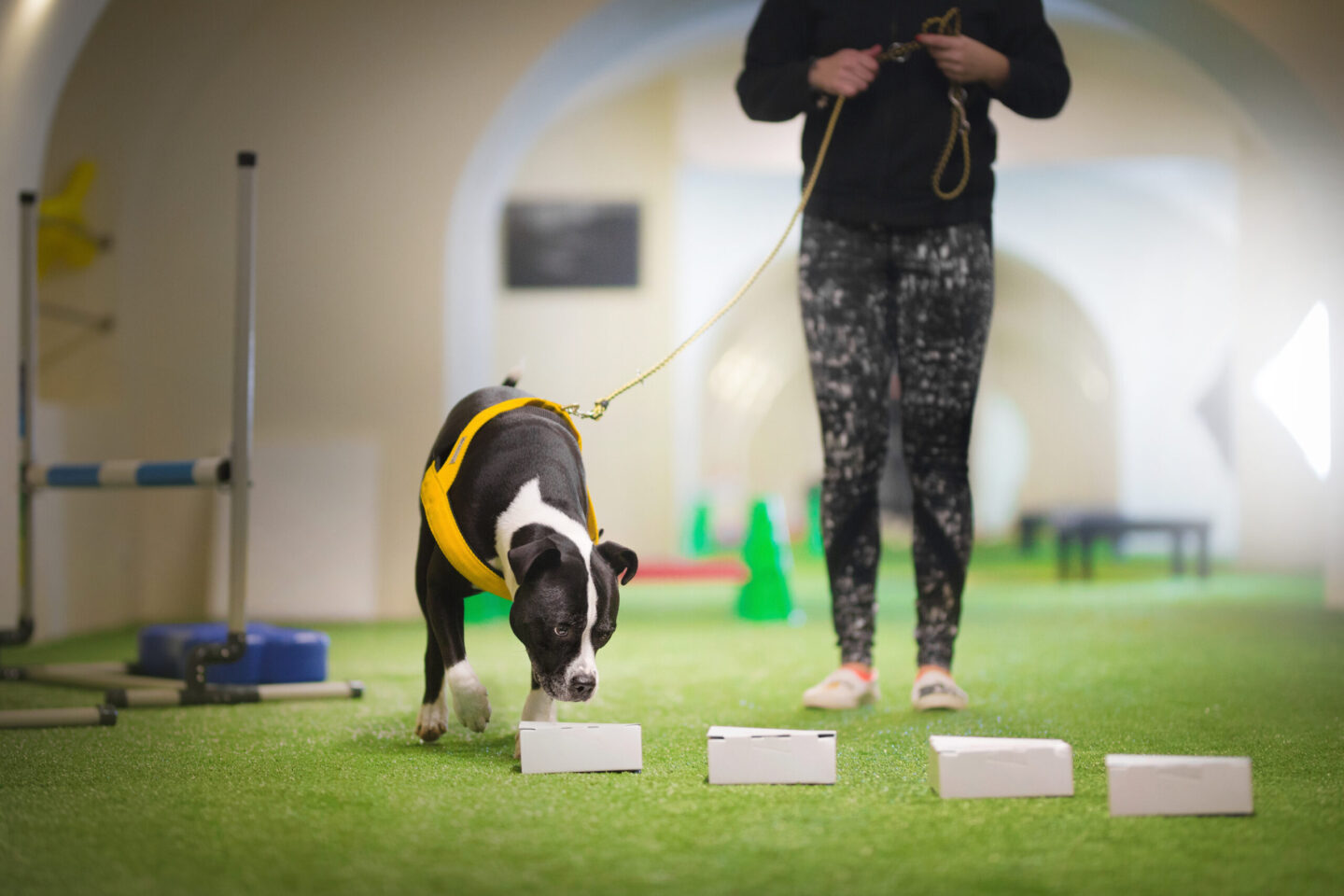
Build a foundation you can read
- Prepare carefully
Handle target odor, samples, holders, and cold objects so contamination and repeated visual patterns do not answer the puzzle. - Shape precisely
Develop the nose-freeze indication through position, duration, cue introduction, and handler-movement changes. - Connect the chain
Move from an isolated indication to discrimination, new locations, and a first simple search routine.
The dog’s nose is extraordinary. The training arrangement still matters.
What should the learner do at source? How will you distinguish target odor from a cold object? Where will reinforcement be delivered? What happens when the holder, location, trainer position, or competing stimulus changes? When does an alert become part of an independent search rather than an exercise tied to one familiar picture?
Repeatedly hiding odor and celebrating a find can conceal which link is fluent and which is being solved through trainer movement, object pattern, accidental contamination, or luck. Stage 1 lets you isolate the parts, strengthen them, and reconnect them with more control over what each repetition teaches.
The foundation route
- Prepare the odor and environment. Follow appropriate handling guidance and reduce accidental information from contamination or repeated setups.
- Build the indication. Shape position and precision before asking for longer time at source.
- Add duration and cue control. Measure time in the target behavior, then introduce the alert cue when the response is ready.
- Vary one feature. Change handler movement, holder, location, or competing stimulus without changing the whole problem.
- Discriminate and search. Randomize hot and cold objects, generalize selectively, and place the indication into a simple search chain.
Your six-week learning map
Week 1 · Prepare odor and build the indication foundation
Learn sample preparation and handling, examine odor-introduction choices, and establish hand-touch or chin-rest foundations for the later nose-freeze behavior.
Week 2 · Build precision and duration
Use the clock-face delivery arrangement to improve placement, shape the alert, and measure duration as time in the target behavior.
Week 3 · Transfer duration and add an alert cue
Use chin rest to examine duration mechanics, introduce the alert cue when the behavior is ready, and analyse the influence of trainer movement.
Week 4 · Add competition and holder variation
Introduce relevant competing stimuli and vary odor holders so the holder itself does not become the complete picture of the task.
Week 5 · Change holder location and discriminate
Vary the holder position and introduce randomized hot-versus-cold exercises in which target odor—not a repeated trainer pattern—predicts the indication.
Week 6 · Generalize and build the first search routine
Work in selected new locations and with new objects, then add a search cue as the bridge from a trained indication to an independent chain.
What you will observe and record
- odor preparation, holder, cold objects, and contamination controls;
- latency, orientation, and the first contact with source;
- nose-freeze position, precision, and measured duration;
- the learner’s response while the trainer moves;
- response to randomized hot and cold objects;
- reinforcement placement and reset; and
- which link changes first when the complete chain becomes less clear.
Watch indication training in context
This earlier student example shows Carol and Odie working with an indication exercise and resetting after an error. Use it to observe the trainer’s response, the learner’s return, and how the next repetition begins.
Is Stage 1 right for you?
Choose this course if you are beginning nosework, want a more systematic indication process, or already search informally but need cleaner discrimination and a more legible alert. It is designed for caregivers, training enthusiasts, and professionals who want to understand the learning arrangement around scent.
The demonstrations use dogs and target odors common in sport nosework. Odor materials, health, mobility, environment, and organization rules require individual safety decisions. Complete vehicle searches, inaccessible hides, full trial preparation, and organization-specific tests belong beyond this foundation.
What students from earlier editions say
Earlier editions included different participation and support routes. These comments describe students’ experience with the course content and demonstrations.
“I loved that the course was broken up into perfect bite size chunks with excellent video demonstrations.”
“Movies with instructions are short and exercises are very well presented.”
Your instructor
Agnieszka Janarek is the founder of Tromplo and an animal trainer with a background in Applied Behavior Analysis. She teaches nosework as a meeting point between scent physics, learning history, trainer mechanics, and the learner’s independent behavior.
The dog’s sensory system deserves a clear training arrangement around it. I want you to know which part of the chain you are teaching, what evidence tells you it is ready, and when a smaller exercise will produce a better next repetition than a harder hide.

Build the indication, discrimination, and first search chain
US$139 · six-week Auditor / self-study course · one year of access.
You receive written lessons, video demonstrations, practical exercises, and a complete foundation route from odor preparation to the beginning of independent searching.
Questions before you enrol
Do I need previous nosework experience?
No. This is the foundation course. It begins with odor preparation and indication components before building discrimination and a simple search routine.
Does Stage 1 prepare us for every type of search?
No. It develops indication, duration, cue control, holder and location variation, discrimination, and first searches. Stage 2 adds more complete environmental and vehicle-search foundations.
Which target odor should I use?
Use materials and handling procedures appropriate to your training goals, local rules, health, and environment. The course teaches the preparation and learning principles; organization requirements vary.
Does this offer include individual review?
This is the Auditor / self-study route. It includes the complete course materials, demonstrations, exercises, and one year of access.